 이 누리집은 대한민국 공식 전자정부 누리집입니다.

Skip Navigation


Exhibitions
Easily Learned and Conveniently Used
Home > Exhibitions > Permanent Exhibition > Easily Learned and Conveniently Used

The industrial revolution marked a major turning point for Hangeul. The rise of mechanical printing allowed for the mass production of Hangeul newspapers, magazines, modern novels, and other publications. As a result, the spread of information and people’s access to publications were further accelerated. Moreover, industrialization led to the rapid development of typewriters and keyboards for the mechanized transcription of Hangeul.
1) Hangeul and Modern Publishing
Before the invention of the printing press, texts had to be manually printed with woodblocks or metal type, so publication was quite limited.
The introduction of mechanical printing in the late nineteenth century made publishing much easier and less expensive, leading to a huge increase
in the number of books and published texts.
Texts were distributed more widely and rapidly, sparking the interest of the public and transforming the entire public perception of written
materials. The accelerated development of printing technology enabled a veritable deluge of information in Hangeul newspapers, magazines,
and novels. Hangeul was increasingly associated with national sentiment, popular culture, and communication, resulting in the steady escalation
of its overall status and power in Korean society.
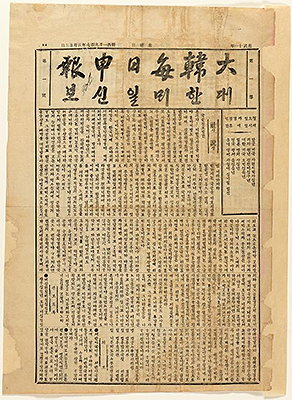
Daehanmaeilsinbo
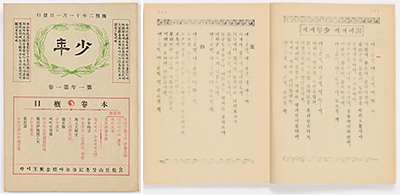
Sonyeon


2) Mechanization of Hangeul
With the mechanization of writing and printing, Hangeul became more than a simple means of communication. In the age of industrialized society,
the fast and accurate communicate of information was not just a luxury, but an absolute necessity for cultural and economic growth.
The mechanization of Hangeul began in 1888, when Kim Hak-woo created and published the Korean Morse code. The next major step occurred in
1914, with the invention of the Hangeul typewriter by Lee Won-Ik. Since then, the Korean typewriter has been continually improved through
innovations by Song Gi-ju, Kim Joon-seong, Gong Byeong-wu, Jang Bong-seon, Kim Dong-hoon, and others. Also in the early twentieth century,
the Korean braille system for the blind was also developed. The continual improvements in the mechanization of Hangeul have demonstrated
the language’s advanced capacity for digitization, making it ideally suited for the new age of computer technology.
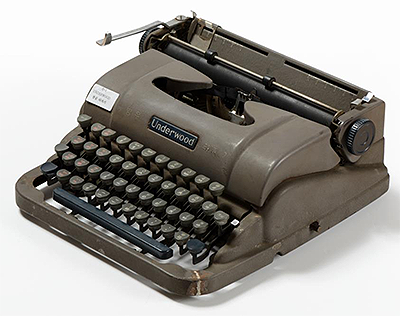
Gong Byeong-wu Typewriter
NATIONAL HANGEUL MUSEUM
139, Seobinggo-ro, Yongsan-gu, Seoul, 04383, Republic of Korea Tel : 02-2124-6200COPYRIGHT© NATIONAL HANGEUL MUSEUM. ALL RIGHTS RESERVED


하단메뉴 영역
 예약하기
예약하기


